
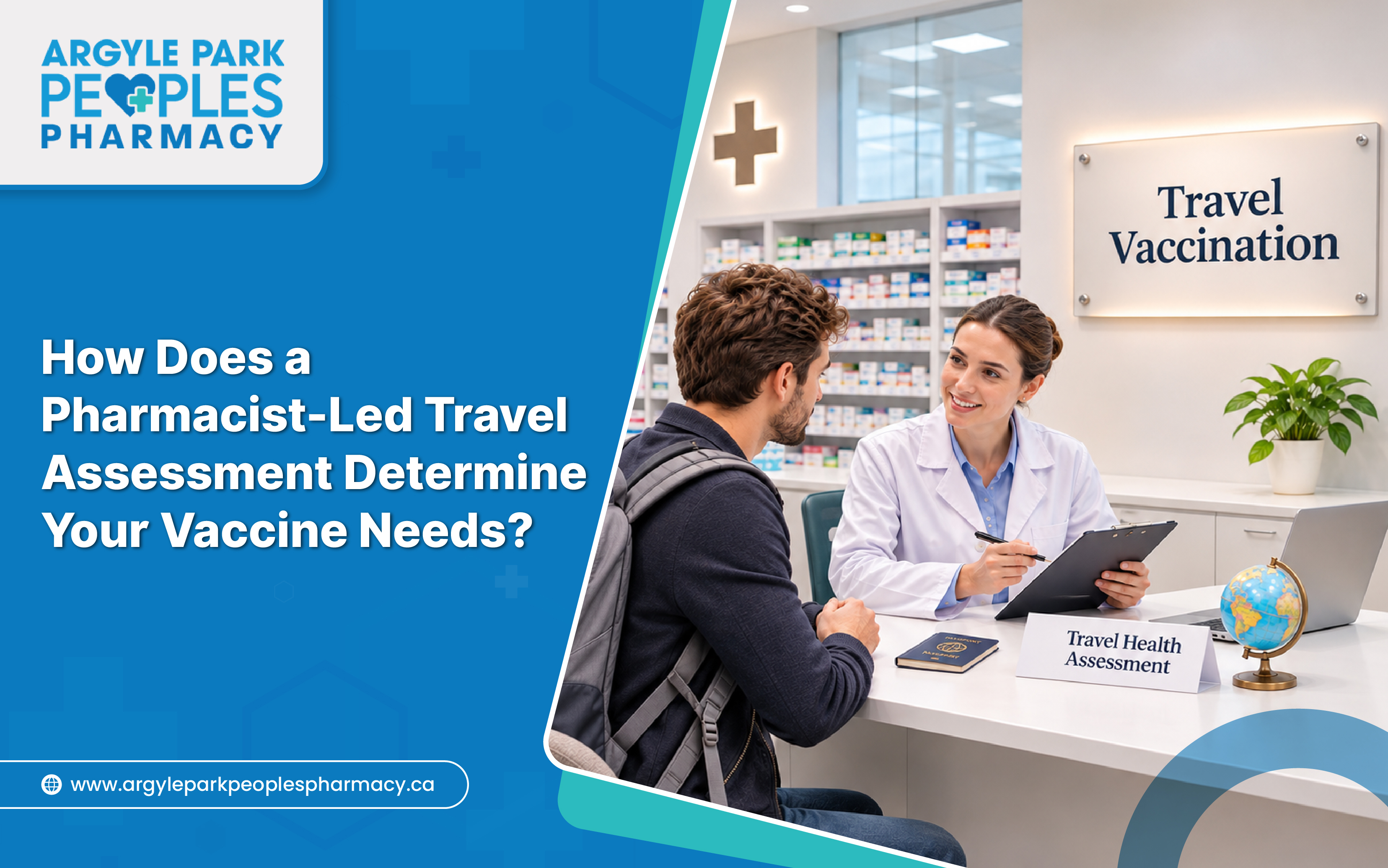
How Does a Pharmacist-Led Travel Assessment Determine Your Vaccine Needs?
When planning an international trip, most people think about flights, accommodation and what to pack. But there is one more thing worth checking before you leave: whether you need any vaccinations. Health risks differ from one destination to another. Your travel plans, length of stay and medical history can all affect which vaccines you may need.
A travel health assessment helps you understand what to consider before departure. During the consultation, a pharmacist will ask about your destination, review your vaccination history and discuss any health concerns that may be relevant to your trip. If you are planning to get travel vaccination in Regina, knowing what happens during this assessment can help you prepare for your appointment.
Why Should You Get a Travel Health Assessment Before Your Trip?
Travelling to another country can expose you to infections that are not commonly found in Canada. In some places, contaminated food and water may be a concern, while other destinations have a higher risk of mosquito-borne diseases.
A travel health assessment gives you a chance to discuss these risks before your journey. The pharmacist can check whether your regular vaccinations are up to date and whether you should consider any additional vaccines based on your destination.
For example, a person visiting family in another country may have different health considerations from someone planning to spend several weeks exploring rural areas. Your travel plans matter when deciding what precautions to take. Along with vaccinations, the pharmacist can also offer advice about drinking water, food safety and protecting yourself from insect bites.
What Will the Pharmacist Ask During Your Assessment?
Before suggesting any vaccines, the pharmacist in Regina will want to know a little more about your trip and general health. Simply mentioning the country you are visiting may not be enough, as health risks can differ between regions within the same country.
You can expect questions about a few important things:
- Your Travel Destination: Which countries and specific regions are included in your travel plans?
- Length of Stay: Are you going for a few days, several weeks or a longer period?
- Planned Activities: Will you be visiting rural communities, spending time outdoors or staying in local accommodation?
- Medical History: Do you have any existing health conditions, allergies or previous reactions to vaccines?
- Vaccination Records: Which vaccines have you already received? Are any routine vaccinations or boosters due?
- Previous Travel: Have you visited the same region before or travelled to areas with similar health risks?
These questions help the pharmacist understand your situation before discussing suitable vaccinations and other precautions. It is helpful to bring your vaccination records and travel itinerary to the appointment, if available.
Which Vaccines Might Be Recommended Based on Your Destination?
The vaccines you may need depend on where you are travelling. Some countries have a higher risk of certain infectious diseases, and a few also have specific vaccination requirements for visitors.
Depending on your destination, the pharmacist may discuss vaccines such as:
- Hepatitis A: This vaccine may be recommended when travelling to places where contaminated food or water can spread the infection.
- Hepatitis B: Your travel plans and possible exposure to infected blood or bodily fluids may influence whether this vaccine is recommended.
- Typhoid: Travellers visiting areas with a higher risk of food and water contamination may need to consider this vaccine.
- Yellow Fever: Some countries in Africa and South America have a risk of yellow fever. Vaccination may also be required when entering certain destinations.
- Japanese Encephalitis: This vaccine may be considered for people travelling to certain parts of Asia, especially when spending extended periods in rural areas.
You do not necessarily need all these vaccines just because you are visiting a particular country. The pharmacist will consider your itinerary, activities, length of stay and medical history before discussing which vaccinations are relevant.
Does Your Age or Medical History Change Which Vaccines You Can Get?
Your health history is another important part of the assessment. Not everyone can receive the same vaccines, even when travelling to the same destination.
For instance, children and older adults may have different vaccination needs. Pregnancy, breastfeeding, certain medical conditions and medications can also affect whether a particular vaccine is suitable.
The pharmacist may ask about:
- Any allergies or reactions you have experienced after previous vaccinations.
- Existing medical conditions or problems affecting your immune system.
- Medicines you are currently taking.
- Pregnancy or breastfeeding, where applicable.
- Vaccines you have already received and whether booster doses are due.
Try to share this information openly during your consultation. Even a detail that seems unrelated to your travel plans may help the pharmacist identify a possible precaution. If a vaccine needs further medical consideration, they can guide you on the next steps.
How Early Should You Book a Travel Health Assessment?
It is best to arrange your appointment at least six weeks before your departure. Some vaccines need multiple doses, and others take time to provide adequate protection. Booking early gives you more time to complete the recommended schedule.
Leaving vaccination arrangements until the last few days can make planning difficult, particularly if you need more than one dose.
But what if your flight is already booked for next week? You should still consider having an assessment. Some vaccines may be suitable even when departure is close, and the pharmacist can explain which precautions are worth taking during your trip.
What Should You Do After the Assessment?
Once the pharmacist has reviewed your travel details and medical history, they will explain the vaccines that may be appropriate for you. This is also a good time to ask about vaccination schedules, possible reactions and anything you are unsure about.
Depending on the recommendations, you may need to:
- Receive the suggested vaccines at a travel vaccination pharmacy in Regina.
- Arrange another appointment if additional doses are required.
- Discuss preventive medications, where appropriate.
- Follow food and drinking water safety precautions.
- Take steps to avoid mosquito bites and other insect exposure.
- Learn about possible vaccine side effects and aftercare.
There is no need to rely only on the information discussed during your appointment. Before travelling, check the latest official travel health advisories for your destination. Entry requirements and health recommendations can change, so it is worth reviewing them again closer to your departure.
Conclusion
Getting the right vaccinations before travelling starts with understanding the health risks at your destination. A pharmacist-led travel health assessment looks at more than just your travel location. Your medical history, previous vaccinations, planned activities and length of stay all help determine which vaccines may be suitable.
If you are planning an international trip, contact Argyle Park People's Pharmacy to discuss your travel health requirements and arrange an assessment before you leave.